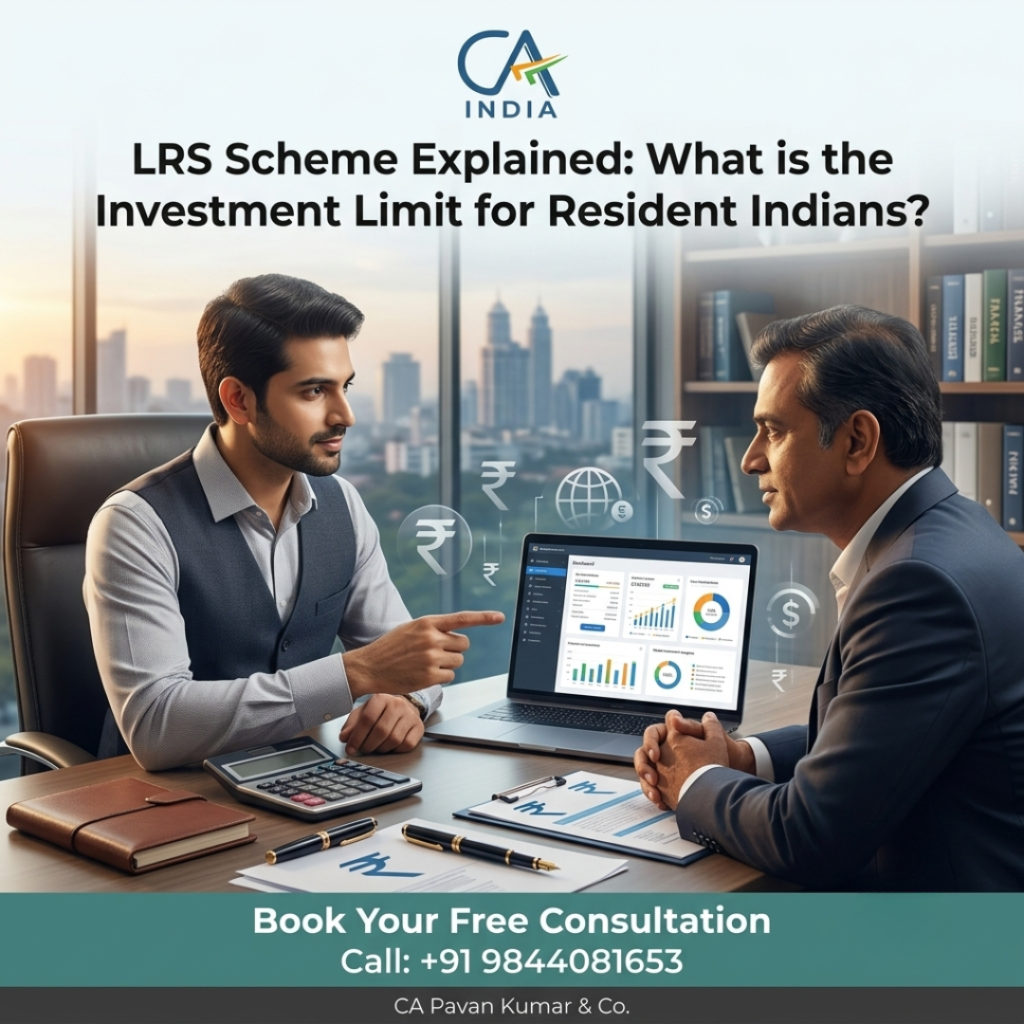
The Liberalised Remittance Scheme (LRS) serves as a streamlined gateway for resident Indians to remit funds abroad for international investments, education, medical expenses, and family maintenance. Established under the Foreign Exchange Management Act (FEMA), the scheme allows individuals to diversify their portfolios internationally without requiring special approvals from the Reserve Bank of India (RBI).
However, understanding the LRS limits and the applicable Tax Collected at Source (TCS) is critical, as substantial changes to TCS rules took effect on April 1, 2026.
1. The Basic Limit: USD 250,000
Each resident Indian, including minors, is entitled to remit up to USD 250,000 per financial year (April 1 to March 31).
- Aggregate Cap: This limit covers all current and capital account transactions combined. For instance, if you remit USD 100,000 to purchase foreign stocks, your remaining limit for other purposes—such as travel or education—becomes USD 150,000 for that fiscal year.
- Family Pooling: Every family member possesses an individual limit of USD 250,000. Families often utilize these individual quotas collectively for large investments.
- Non-cumulative: This limit is non-cumulative. If you do not utilize the full USD 250,000 by March 31, the remaining quota is forfeited and cannot be carried over to the next financial year.
2. TCS Rates (Effective FY 2026-27)
The Union Budget 2026 provided targeted TCS relief for medical and educational remittances. Below are the applicable TCS rates for FY 2026-27:
| Purpose of Remittance | TCS Rate (Up to ₹10 Lakh) | TCS Rate (Above ₹10 Lakh) |
| Education (Loan Funded) | Nil | Nil |
| Education / Medical | Nil | 2% |
| Overseas Tour Packages | 2% (no threshold) | 2% (no threshold) |
| Other (Investments, Property, Gifts) | Nil | 20% |
Important Note: TCS is not an additional tax; it is a tax credit. It is collected and deposited against your PAN and can be adjusted against your final income tax liability when filing your ITR, or claimed as a refund.
3. Permitted vs. Restricted Uses
While the LRS is versatile, you must specify a “Purpose Code” for every transaction via Form A2.
- Permitted: Purchase of foreign stocks and mutual funds, overseas property, gifts for family, medical treatment, education, overseas travel, and maintenance of close relatives.
- Prohibited: Remitting money for lottery tickets, sweepstakes, prohibited magazines, foreign margin trading, foreign exchange trading, or investments in FATF non-cooperative countries.
4. Strategic Compliance Tips
- Keep your PAN Active: Ensure your PAN is linked to your [Your Aadhaar] to avoid it becoming “inoperative,” which would result in significantly higher TCS rates.
- Maintain Records: Retain copies of Form A2, bank remittance statements, and purpose-specific documentation (e.g., tuition letters, medical estimates) for your records.
- The “Credit Card” Exception: Currently, payments made with international credit cards while traveling abroad are generally excluded from LRS and TCS. However, always consult your specific bank for the latest policy updates before executing large transactions.
Invest Globally, Comply Locally
FEMA and Income Tax compliance are mandatory for all foreign investments. For substantial international portfolios, your tax filings must accurately incorporate these foreign investments and TCS credits.
To keep your international investment strategy compliant, let our advisory team manage your LRS documentation and tax credit reconciliation.
Book your appointment today:
- Website: https://capavankumar.com/
- 📞 Call us: +91 9844081653
- 📧 Email: capavankumars@gmail.com