
GST on Real Estate: Under-Construction vs. Ready-to-Move Properties
GST laws significantly impact your home-buying budget. Learn the difference between 1%, 5%, and 0% GST rates for residential properties...
Read Article →

How to Get DPIIT Recognition and Access Startup Perks (2026 Rule Updates)
The government has updated DPIIT recognition rules for 2026. Discover the new turnover limits for Deep Tech startups and how...
Read Article →

Cross-Border E-commerce: FEMA Guidelines and Payment Gateways
Scaling your e-commerce business globally? Ensure your payment gateways meet the new RBI PA-CB regulations and manage your export realization...
Read Article →

An Investor’s Financial Due Diligence Checklist for Series A Funding
A Seed round focuses on your pitch, but Series A requires data-backed execution. Prepare for your Series A Financial Due...
Read Article →

FATCA and CRS: Why Indian Banks Are Asking for Your US Tax ID
Is your Indian bank asking for your foreign Tax ID? Don't panic. Learn how FATCA and CRS global reporting works...
Read Article →

Taxation on SaaS Companies in India: Revenue Recognition and GST
GST for SaaS is not straightforward. Learn how to handle OIDAR services, export your software with LUT, and properly recognize...
Read Article →

Section 80-IAC: Tax Holidays for DPIIT-Recognized Startups
Is your startup tax-free? Learn the difference between DPIIT recognition and the IMB certification required to claim your 3-year corporate...
Read Article →

How to Value Your Startup: Simple Steps for Business Valuation in India
Your startup has two valuations: commercial and statutory. Learn the quantitative methods regulators accept and who is authorized to sign...
Read Article →

OCI vs. NRI: Understanding the Financial and Investment Differences
OCI cards are not Indian citizenship. Learn how FEMA treats NRIs and OCIs differently regarding bank accounts, stock investments, and...
Read Article →
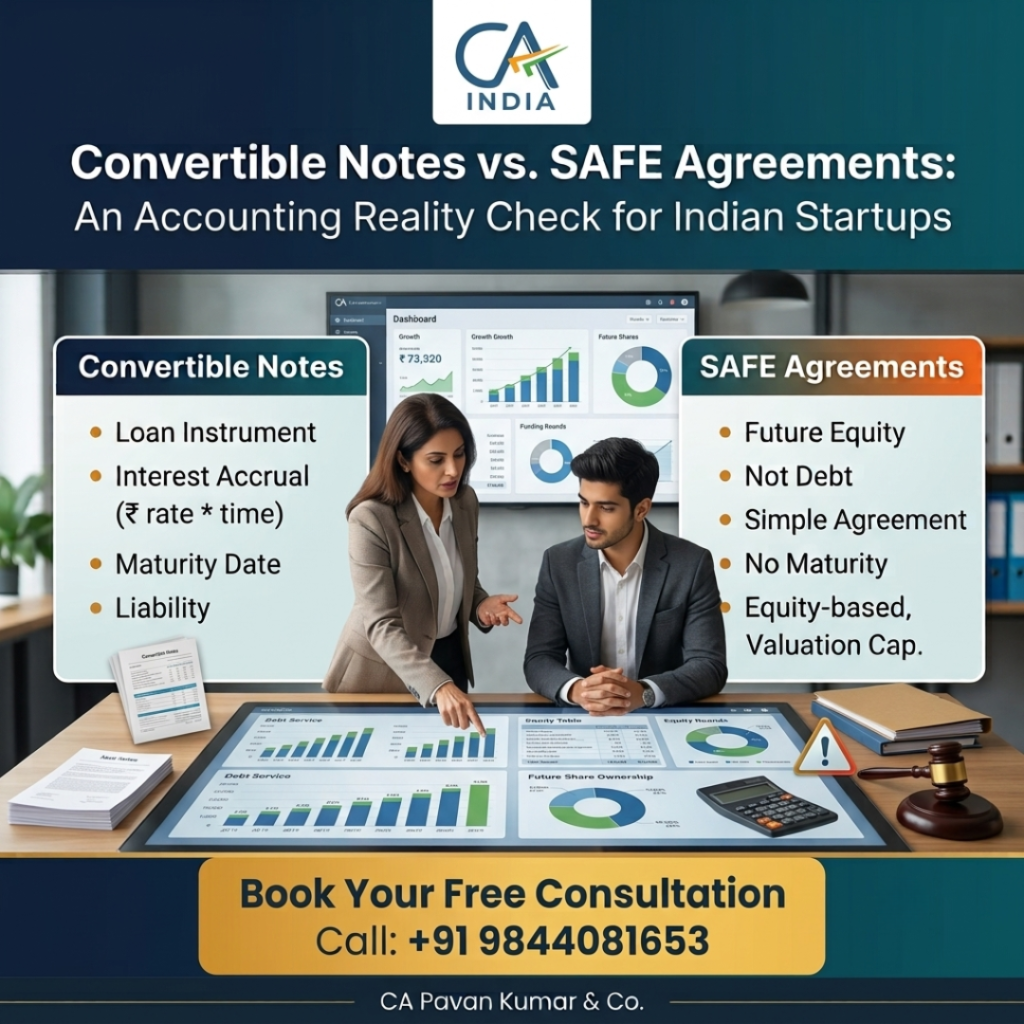
Convertible Notes vs. SAFE Agreements: An Accounting Reality Check for Indian Startups
Standard US-based SAFE agreements often violate Indian corporate law. Discover the compliance requirements for iSAFEs and Convertible Notes in India.
Read Article →